
Elephants are dying again in Southern Africa
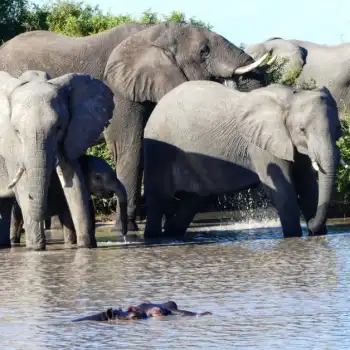
This past weekend we learned that Elephants are dying again in Southern Africa. This time it is in Zimbabwe. Last week, the remains of twelve dead Elephants were discovered in the Panda Masuie Forest area as reported by the press. The Panda Masuie Forest area is located between Hwange and Victoria Falls. It is along the western border of the country with Botswana. This is an area where the Elephant and other wildlife, roam freely. They move from Zimbabwe into Botswana and back again depending on the availability of food and water. Blood sample analysis Blood samples have been taken and sent to a laboratory for analysis. This will hopefully determine the cause of their deaths. According to Tinashe Farawo, spokesman of the Zimbabwe National Parks and Wildlife Management Authority. Cyanide poisoning has been ruled out following initial tests as only Elephants were affected. No vultures or any other species like Hyena and Jackal which would feed on the carcasses were affected. Poachers are also ruled out because the tusks were intact.” Similar circumstances The circumstance of these twelve Elephants dying again in Southern Africa are very similar to the deaths of the Elephants in the other southern African country, Botswana. This took place in the Okavango Delta in May 2020 as reported in our Blog. The distance between these locations is great. However, it is such a short period of time following the deaths of the 350 odd Elephants in Botswana. A very thorough investigation is required. Poaching not to blame The authorities in Botswana have ruled out the obvious enemies of poaching and Anthrax as reasons for the Elephant dying in Botswana. Tests ordered by the Botswana Government at laboratories in South Africa, the United States and Zimbabwe remain inconclusive. Pesticides, Agrochemicals, and Pathogens have, however, been ruled out. In a statement, Botswana’s environment ministry said it was investigating natural poisoning as a potential cause of death. The results received so far do not eliminate some form of poisoning. Environmental factors, including naturally occurring toxins, are still being investigated. Elephants die off This is the largest die-off of Elephants, outside of severe drought conditions experienced in a very very long time. The latest speculation has been around a “natural” toxin being the cause. Indications are that the cause may be some bacteria. The Elephants are overpopulated here resulting in them eating vegetation that could be poisonous. Awaiting conclusive report The world still awaits conclusive evidence explaining why these Elephants are dying again. The two investigations in Botswana and Zimbabwe will no doubt continue. The scientists will eventually find the actual reason for the die-off.
Celebrating World Lion Day
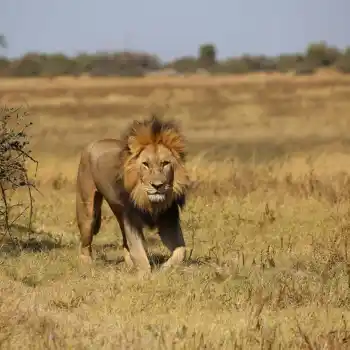
On Monday 10 August we were all celebrating World Lion Day. These powerful majestic animals are truly spectacular. Especially when you are able to observe them in wild out on the African Savanna, on their home range. It is quite impossible to establish the exact number of Lions left in the wild. As we are celebrating World Lion Day we must take note that their existence is under severe threat. We know that Lions have become extinct in 26 African countries. They have vanished from around 95 percent of their historic range. Experts believe that there are less than 20,000 Lions left in the wild. The State of the Lion is under severe threat. Why? There are a few reasons for this. The most important is the loss of habitat due to the ballooning human population. We know, and history confirms, that whenever and wherever humans and wildlife meet and are competing for resources, wildlife will ALWAYS lose! Human Greed Now add to this the single most damaging characteristic of all creatures on this planet. A trait that only humans possess. GREED! Human greed has led to the worst possible exploitation of Lions. We celebrate World Lion Day, but there is a whole industry established in South Africa and neighbouring territories where Lions are bred and housed in cramped overcrowded, filthy enclosures to serve the greed of the human race. They are destined for Canned Lion Hunting and the lucrative trade in their bones. Canned Lion Hunting You don’t know what “Canned Lion Hunting” is? Cubs are born today as you celebrate World Lion Day. They will join an estimated population of 10,000+ Lions held in captivity in South Africa alone. These cubs are usually removed from their mother within one week of being born. They will be hand-reared while the mother, pining for her lost cubs, goes back into estrous to be mated with a male lion and the cycle is perpetuated. The Lion cubs are taken to another facility that is often given the emotive title of “Sanctuary”. The cubs are hand-reared and habituated to humans. This is often by willing volunteers who have been duped. They are given the story that these poor little cubs were “rescued” and it is now our “responsibility” as humans to care for them. Unsuspecting tourists are encouraged to pay for the privilege to pet the cubs. They can walk with the sub-adult Lions and take many selfies to share with their friends. The sad fact is that these Lions are now habituated to humans. They will NEVER be released back into the wild. Volunteers and Tourists Should this helpful volunteer or free-spending tourist want to follow the progress and growth of the cute little Lion cub featured in their selfies, a shock awaits them. They may well discover that this Lion will be a magnificent fully grown specimen in their prime at around 12 months old. This Lion has usually been pumped full of steroids to speed up their growth. Now the Lion is advertised in magazines and on the internet as a beautiful specimen for a TROPHY HUNT. Cash flush hunters from around the world pay huge sums of money to come to Africa to kill this Lion. The Lion is probably drugged on the day of the organized hunt and then taken out of his cramped enclosure to be placed out in the bush. Mr or Mrs brave hunter arrives and is accompanied by a large crew. This comprised of at least a tracker and a local professional hunter to ensure the client’s safety. The tracker, leading the way will follow several little bush paths that may take an hour or two to negotiate. Eventually, he leads the brave hunter to where the Lion has been placed in the bush. Then the supporting crew steps aside so the brave hunter can do the killing that he has paid for. Trophies The joke is that the hunter has traveled from very far away to shoot his / her trophy. But the hunter’s “trophy” is not the whole animal because the head, feet, and hide of the animal is usually the allowed part of the “trophy”. The breeder/operator will retain the carcass. The soft tissue is stripped from the skeleton probably for pet food industry. The Lion skeleton is then placed out in the sun so the bones can dry out. The bones are shipped off to Asia at a huge profit to be used in the Tiger Bone industry. Be Ethical The organization Blood Lions lifted the lid on this cruel trade. They have launched a Global Awareness Campaign named 800 VOICES FOR 800 LIONS. Will you get involved and help our Lions? Above all, you may be the ethical and responsible Tourist and travel on ethical and authentic Safaris. Do not support any facility that promotes any kind of personal interaction with a predator. You are probably playing a part in signing their death warrant.
World Nature Conservation Day
World Nature Conservation Day on 28th July 2020 arrives at what is probably the most critical time in the evolvement of our world for close on a century. We are NOT the masters of our universe. We are NOT superior beings in our environment. Our existence is intertwined with all the living organisms in our environment. It has taken one tiny little virus, a mere speck under the microscope, to teach humanity a lesson. What is the lesson? Humans are not superior. As the custodians of our environment and we need to stand up and accept this responsibility especially on this, the World Nature Conservation Day. We are Responsible The great teachers and mentors in the sphere of Personal Growth and Development will tell you that you are no more than the sum total of your past. In other words, you are solely responsible for what you are today and what you have today. No matter whether it is health or wealth, abundance or lack. It is so because of your decisions and actions in the past notwithstanding a very small amount of genetic factors that we inherited! The message is clear – WE ARE RESPONSIBLE! The columnist Amy Pieterse makes the point that our economic, social, and technological progress is supposedly a testament to our development beyond the animal mind. But at what cost? The earth is burning before our eyes. We’ve plundered and destroyed it to the point of ecological collapse. If our transition to consciousness was an evolutionary advantage, then we have totally botched it. Grim Evidence The grim evidence is that 60% of the vertebrate animal populations have disappeared since the 1970s. This directly due to our human activity. If the human population were to be reduced by 60% today, it would mean removing the total human population of North America, South America, Oceania, Africa, Europe and China! I suspect that nature would breathe a huge sigh of relief! In 2019 we watched as the Amazon Jungle burned. There was an increase of over 80% in the number of fires compared to the previous year. This is attributed to the spike in deforestation that is now driving the devastating blaze in around 76,000 locations. The message is clear – WE ARE RESPONSIBLE! The Sixth Mass Extinction In an article published more than three years ago, eminent scientists warned that the Earth’s sixth mass extinction event is already underway. This extinction is directly attributed to the actions of Homo sapiens. Even if it is stopped now, it would take the world in excess of 5 million years to recover. Covid-19 And now that the Covid-19 wolf is howling at the door. Will the global Nature Bank sink deeper into overdraft as governments around the world focus attention more narrowly on economic and social recovery plans? Plans aimed at helping the human race? Let us take full and absolute responsibility for the environment immediately around us. Do all we can to mitigate our negative impact. Add our voices to the voices of so many environmentalists that have been banging on the door of our consciousness. They have tried in vain to focus our attention on the damage that our lifestyles are doing to the environment. When the tropical forests have been felled, coal and gold hauled from the bowels of the Earth and clean water sources fouled or depleted… well, what then? A silver lining I believe that there is a silver lining to this dark cloud called COVID-19. It has served as the major wake-up call for people around the world. We are responsible and it is up to US as individuals to create the change. The change in our own lives that will benefit our environment. THEN we can go and bang on the door of governments. At local, regional, and national levels to implement the changes necessary to turn the tide. Let us be the positive influence in the world.
Elephants died in Botswana Okavango Delta
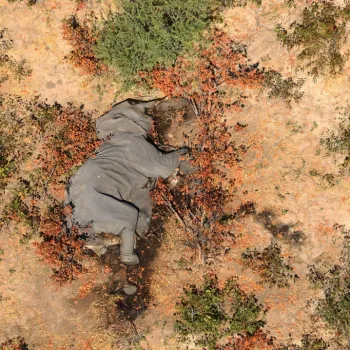
The headlines “Elephants die in Botswana” were proclaimed boldly on news platforms around the developed world towards the end of May 2020. The gruesome images of 350 odd dead Elephants even took precedence, albeit for a short while, over the constant reporting on Covid-19. The cause as to why, remains a mystery. Why would these Elephants have died in Botswana, for no apparent reason? Poaching was ruled out because the tusks had not been removed. Many of the Elephant carcasses were lying face down on folded legs. This indicated a sudden death with the Elephant collapsing on folded legs before they had the time to lie down. There was also reported evidence of the Elephant walking in circles. Investigation & Speculation There were so many questions. Yet the Botswana Government maintained an ominous silence over the issue in the weeks that followed. This led to the very disturbing narrative in The Guardian newspaper in the UK that “Botswana can’t save its own Elephants”! This, for a country (Botswana) that has done exceptionally well in their conservation efforts. Take a look at this report released in 2008. The figures speak for themselves. From the first survey in 1973 when the Elephant population in Botswana was indicated at around 20,000. To a population of 55,000 in 1994, and on to the current population of around 130,000. Clearly, a spectacular recovery and a celebrated conservation success for the country of Botswana. Yet, The Guardian relies on expert voices from the Global North. Experts who denounce the death of the 350 Elephants that died in Botswana (insignificant out of 130,000) as a “conservation disaster” that “speaks of a country that is failing to protect its most valuable resource”. The article accuses Botswana of a “lack of urgency” that “does not reflect the actions of a responsible custodian”. This burgeoning Elephant population led to increased human-wildlife interaction with the resultant crop destruction. Botswana then re-opened controlled hunting in 2019 arousing the righteous wrath of the conservation fraternity. Institutionalized This problem – of the Global North feeling the need to shoulder conservation responsibility for world biodiversity, since the South is incapable of doing so – is deep-rooted, normalized and institutionalized! Conservation funding and research mostly come from the Global North. This is undoubtedly useful to save the world’s biodiversity. And perhaps understandable given the total inequality in global wealth distribution. Also, the fact that the tropics have inherently far greater biodiversity than the North. But if we are to take a global view of conservation, the same standards, ethics, laws and policies to protect endangered species and ecosystems should be applied across the whole world. In reality, conservation is the burden of the Global South. Human – Wildlife interactions across the world Human-wildlife interactions are increasing across the world. Large, dangerous animals like bears and wolves were exterminated extensively in the developed world. Now, their numbers are beginning to bounce back, moving out of protected areas and they are interacting with humans after a gap of a few centuries. In the developing world, animals have never lived exclusively in “protected areas”. They’ve co-existed with people across much of their range. But human populations are rising and elephant, tiger, boar and leopard numbers are rising because of successful conservation measures. Animals in the developing world are increasingly damaging people’s crops and property, killing livestock and even people. The disparity in the management of these interactions across the world is worth highlighting. Wolves in USA Wolves provide a classic example. They once roamed freely across the North American continent. But they were exterminated by white settlers (along with bears, coyotes and bison, much to the dismay of the Native Americans) across almost all of the United States. Around 1995, a few wolves were reintroduced into Yellowstone (National Park) from Canada. This became an incredible conservation success story with cascading effects. The entire landscape was revived in unimaginable ways. Herbivores changed their grazing behavior. Vegetation along streams changed and even rivers modified their courses. But, unfortunately, the story doesn’t stop here with a happy ending. As the wolf population expanded, they became the enemy for farmers. By 2008, they were de-listed in some states and farmers were allowed to shoot them. The tussle between conservationists and farmers has continued. The government’s wildlife services themselves killed 357 wolves in 2018. A very significant number out of a population of only 18,000. Ranchers and others also illegally kill wolves, sometimes even precious radio-collared (at a huge expense) wolves that are being studied. Apart from wolves, wildlife services routinely kill a large number of animals to protect the livelihoods of farmers. During 2018, with a budget of over $150 million, they killed over 2.6 million wild birds and animals. Europe Europe has similar, if not as high-profile, case studies. In September 2017, Germany had its first free-roaming bison since the Industrial Revolution. One lone male Bison wandered in from Poland. This should have been a reason for celebration. Especially since many zoos have captive breeding programs to reintroduce bison. But the poor animal was quickly shot dead as locals decided it was a threat, even though killing an endangered animal with no provocation was illegal. Beavers introduced into the UK is a similar story. The first few were released in 2009, against farmers’ wishes. More have been released since, either accidentally or illegally by conservation enthusiasts. Just this year, farmers have killed at least 87 of the 400-odd absolutely harmless beavers in Scotland. Wolves, bison and beavers are all relatively harmless animals in terms of the damage they inflict — there is little or no chance of them killing people. Elephants alone kill almost 500 people in India every year, their numbers are going up and 75 per cent of their range is outside protected areas. So why does the Indian government not consider culling elephants on people’s private lands? When Botswana wants to kill a few elephants, there are vociferous protests from the very nations that kill wild animals en masse under the guise of “scientific management”, even those that cause a lot less damage. We rarely find conservationists, scientists or
The Creation and Geology of Victoria Falls
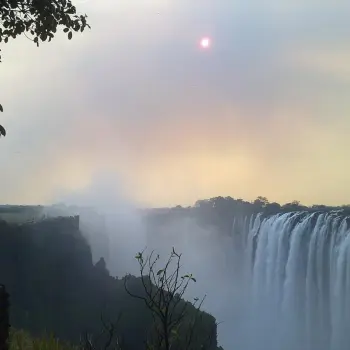
The creation and underlying geology of Victoria Falls is a marvel in its own right. This World Heritage Site especially when seen at the time the Zambezi River is in full flood is a truly spectacular sight. To understand how this beautiful waterfall was created, we will study the underlying geographical processes that took place and explore how the spectacular Batoka Gorge was formed. Bedrock formation The bedrock in the Victoria Falls area is Basalt, a dark volcanic rock formed around 180 million years ago. The layer of Basalt was laid down over a period of one million years. This as a result of gentle volcanic eruptions. Each successive eruption of lava settling over the previous layer. This layer of Basalt is up to 300 meters (900 feet) deep in the Victoria Falls area. It creates a geological “island” in the middle of the surrounding sand. The Basalt layer is shown in GREEN on the map below. The Basalt stretches 200 km along the Zambezi River course from near Kazungula to the Matetsi River confluence with the Zambezi in the Batoka Gorge. As the lava cooled deep cracks formed in the rock known as “joints” that generally run in an east-west trajectory. The break-up of Gondwanaland around 110 million years ago created tectonic movements. This resulted in a dramatic uplift of the central part of the continent that is Southern Africa today. The giant cracks in the Basalt layer opened further with the break-up of Gondwanaland. They gradually filled with soft sediment. Desert conditions prevailed across the region around Victoria Falls. Around 150 million years ago tropical forests established themselves here. The Dinosaurs roamed freely around this area. At this time the waterfall we know as Victoria Falls was not in existence. Geological changes of Victoria Falls Around 15 million years ago there was another massive uplift of the area that is currently Zimbabwe. This caused the formation of a giant lake across the region that is now the Makgadigadi Pans in Botswana. As a result, the existing river systems were altered and new river systems were formed. All because of this uplift. The Zambezi River at this time was still flowing south from the location of the town of Katima Mulilo and into the Limpopo River on the border of South Africa. Epic Flood Another 10 million years later, there was another dramatic uplift in this region. This results in a massive spill from the gigantic lake located across the Makgadigadi area. It is a flood of epic proportions that flows in an easterly direction across the Basalt rock of Victoria Falls. The floodwaters then eroded the soft sediments out of the cracks in the Basalt rock. The first waterfall was created as the water cascaded down into this crack. As a result of this dramatic uplift, a massive spill and the drainage of the enormous lake took place. The lake was thought to have been larger than Lake Victoria that is 60,000 Sq Km. The Zambezi River then created a new course to the north of this area of up-lift. It flows across the Basalt layer and now connects with the Lower Zambezi towards the east. The lower Zambezi River system was fed by the Kafue River up untill that time. The first waterfall The shift in the watercourse had now created the spectacular waterfall that became the Victoria Falls sequence. The creation and geology of Victoria Falls continue to evolve in geological time. The image below illustrates the different locations of the waterfall to the current location. Victoria Falls is now in its EIGHTH position. Victoria Falls is approximately 100,000 years old. As the geological clock continues to tick, the gradual erosion of a new joint has become evident. This is known as the Devils Cataract. It is located on the western edge (Zimbabwe side) of Victoria Falls. The joint or crack numbers 9 and 10 will come into play over the next few centuries creating a new location for the spectacular Victoria Falls. CREDITS: Siyabona Africa, Les Burger & Brett Hilton-Barber and Lee R. Berger
Conservation in the Cape Floral Region
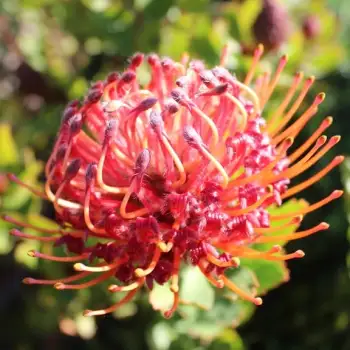
The Cape Floral Region located at the Southern tip of Africa South Africa carries the title of being home to the world’s hottest hotspot, The Cape Floral Region located at the Southern tip of Africa. This beautiful and majestic floral kingdom is the only one to be fully contained within a single country. The Cape Floral Region is a biodiversity hotspot comprising 13 protected areas in the Western and Eastern Cape provinces. It includes the city of Cape Town’s Table Mountain National Park, Boulders Beach which is home to a colony of African Penguins, and the Cape of Good Hope at the Cape Peninsula’s tip. Kirstenbosch National Botanical Garden, located on the slopes of Table Mountain, is home to many of the local fynbos plants, as these plant species are known locally. Incredibly, The Cape Floral Region has the highest known concentration of plant species in the world. The Cape Floral Region has an impressive species count of 9,600 plant species. Even more remarkable is that 70% of these species grow nowhere else on earth. Its nearest rival, the South American rain forest, has only one third the number of species. Restricted growing locations or ranges are a characteristic feature of the species in this hotspot. Some of the plant species have a total range being smaller than half a soccer field. It goes without saying that plowing a field or building a single house in this hotspot can decimate the entire world population of a unique form of life. Unique amphibians and reptiles The Cape is also home to many charismatic animal species. It has a particularly high reptile and amphibian diversity. One such species is the rare Geometric Tortoise (Psammobates geometricus). It is one of the most threatened tortoises in the world having lost 97 percent of its habitat to agricultural expansion. The hotspot is also home to many rare, endangered and unique frog species. Such as the elusive Table Mountain Ghost Frog (Heleophryne rosei), which only occurs on Table Mountain and has one of the most restricted ranges of any amphibian in the world. The threats The highly transformed Cape Flats area outside Cape Town, has the highest concentration of Red Data species in the world and is the leading site for metropolitan species extinctions globally, with fifteen species per km2 being in danger of extinction. This World Heritage Site is by far the smallest and the richest of the World’s six floral kingdoms, but it is also the most threatened. Alien plant infestation, too frequent fires, commercial afforestation, and agricultural and urban expansion has transformed 80 percent of the landscape. This has left scatted fragments of natural vegetation, across the Cape, harboring high numbers of endangered species. Credit for this information and to the sterling work done by Conservation South Africa
Planning your Safari to Southern Africa
The Seasons When you start thinking about and planning your Safari to Southern Africa there is much to consider. What is the best season and time of the year to be planning your Safari to Southern Africa? What is your key motivation? Do you want to concentrate primarily on animals and wildlife? Do you want a balanced itinerary with Wildlife, Scenic beauty, Culture and some of the very popular destinations like Cape Town and the Cape Wine Region? If Cape Town is on your Bucket List, you need to plan carefully. Cape Town and environs have a winter rainfall with some pretty blustery conditions. This clashes with the more ideal climatic conditions in the Safari Areas during the African winter months. Are you a hard-core traveler that takes some discomfort in your stride without much complaint? There are so many questions to consider. Let’s unpack the pertinent information. Planning your Safari for the DRY season. The African winter is the Peak Season and the best time to experience the African Wildlife. The Peak Season typically, are the months from June to August with the High Season the two months on either side. There are several reasons that make this the ideal time for your Safari; It is the dry season which means that there is less food and water available for all the herbivores. This means that they will be congregated close to water sources making your viewing that much more rewarding. There is less foliage on the trees and shrubs during the dry season so your visibility is greatly improved. The congregation of the herbivores closer to the water sources means that the carnivores will also be in close proximity where you may be able to view them. During any extended dry period, many of the herbivores may become weakened making them easier prey for the carnivores. If witnessing a Lion kill is on your bucket list then you will definitely take the last rainfall into consideration for the area of your choice. Of great importance for the comfort of visitors from the cooler climates of the world. The daytime temperatures during this period are mild with colder nights. An average temperature range of 10 – 25 Deg Celsius (50 – 77 Fahrenheit). There are far fewer mosquitos and other irritating bugs around making it safer and more pleasant to travel at this time. There are many advantages to traveling in the dry winter season. The downside is that this is the popular time to travel and with more people around it makes it more difficult to get the bookings you desire. The cost is considerably higher for all services hence a larger budget is required. Planning your Safari for the WET season The annual rains across the Safari Areas of Southern Africa are typically during the months of November to April. The arrival of the annual rains brings new life to the environment with some distinct advantages. A lot of young animals are being born which will delight even the battle-hardened veterans. If you are a keen Birder, this period is ideal with many species of birds displaying their most colorful breeding plumage. The rains often arrive as intense thunderstorms that deposit a deluge of water in a short time. The skies then clear up quickly so you can get out to enjoy nature. Certain areas are more disposed to a day-long steady drizzle so the local conditions should be researched. Southern Africa does not experience monsoon-like rains. The rains and muddy conditions will inconvenience you in the wet season if you prefer traveling on a tight budget that involves camping. The cost of travel is cheaper across the board and you could reach savings of 30% and more due to the lower demand. The downside of traveling in the wet season are the bugs, insects, and especially the mosquitos! Malaria is a major factor in most of the Safari areas so plan carefully. There are several very good Safari Areas that are located outside of the Malaria area so you can safeguard yourself. Unfortunately, all the other bugs will be around to irritate you. Flooding in the Dry Winter Months There are two major attractions and exciting annual events that take place during the Dry Season in Southern Africa. The mighty Zambezi River comes down in flood with the peak being reached late in May as we go into the very dry winter months. The Zambezi River cascades over the spectacular World Heritage Site, Victoria Falls. The flood level of the Zambezi River this year in 2020, is the highest it has been in the last decade. Currently, the water flow is in excess of 4560 Cubic Meters per Second (measured 3 May 2020). The spectacular Victoria Falls is a sight to behold: https://www.youtube.com/watch?v=_pm9xILrvE4 The second major event is the flooding of the Okavango Delta in Botswana. This year in 2020, we are again witnessing a flood of grand proportions. One of the biggest floods seen in the last decade and this happens in the dry winter season. It is one of the great spectacles of nature that should be on every traveler’s bucket list. To witness an inland delta covering around 10,000 hectares of waterways is truly amazing! A delta with the huge number of bird species and wild animals flourishing on the rich vegetation located on islands that are fed by this floodwater. The floodwater commences its journey in the Eastern Highlands of Angola more than 1200 kilometers from Botswana. This video captures this amazing event. Enjoy – https://www.youtube.com/watch?v=ETwLXB8AlBw We look forward to welcoming you to Southern Africa – We will assist you in the planning of your safari to Southern Africa to experience the unspoiled magic of Africa once it is safe to travel post-Covid-19 https://www.youtube.com/watch?v=4RD1cN_b9s8&t=27s
Going on Safari in Southern Africa?
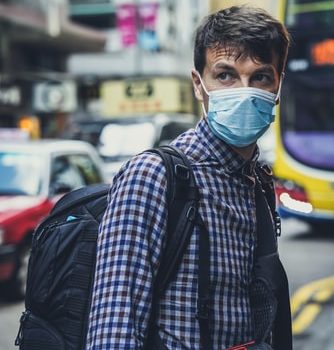
“Going on Safari in Southern Africa?”….. Was the often used greeting to our new friends at many an international arrivals terminal in Southern Africa, as the tired travelers stepped through the doorway leading from the Immigration and Customs area. Alas, that cheerful greeting, “Going on Safari?” has been silenced for several weeks now since the fateful arrival of this uninvited guest, the intruder, the despised COVID-19. The only signs of activity in the once-bustling hive of activity of the International Arrivals Terminal today, is the gentle rumble of a peaceful snore emanating from the gaping mouth of the security guard where he sleeps on his chair in the corner. Even he, is bored beyond measure! This damned virus! Who invited you to Africa, and the world, anyway? Don’t despair BUT, do not allow the media hype, and the fear that their “in-depth” coverage of this pandemic fans liberally hour upon hour, break your spirit and your desire to travel. In the immortal words of Abraham Lincoln, “This too shall pass!” which he used in one of his speeches in the run-up before his election as the 16th President of the USA. The actual, real impact and cost to humanity of this uninvited guest COVID-19, during this year 2020, may never be fully established. But we, the committed servants in the Tourism Industry, the providers of life-changing safari experiences for our guests from around the world, we choose to rally behind these immortal words – THIS TOO SHALL PASS! The Home Office We occupy our Research and Development (R&D) Division to prepare for our bright future post-COVID-19. The R&D Division occupies the table on the left of the doorway of our hastily installed “home office”. The lines of communication between R&D, the Marketing Division and Operations have never been better! Marketing is located at the easy chair and large coffee table to the right of the doorway with Operations occupying the counter against the opposite wall where “they” may connect to the World Wide Web and pile up their files containing log sheets and other critical information. Best of all, there is no bickering between the people of the different divisions because this is a team of TWO at this time. THIS TOO SHALL PASS! is emblazoned across the now very static whiteboard still reflecting the failed bookings for the months of April to August. That huge gut-wrenching tsunami of cancellations that hit us in one very short week. Did I hear you ask Why? Creating Dreams You see, we are the creators of dreams! We carry the huge responsibility of surpassing the very high expectations of our Safari Guests every time. Most of the time we do not even know what their true expectations are, but we are the professionals with the intuitive edge that only grows and develops with heaps of experience. We deliver without fail. We are the dream merchants who have done this so many times over the past two decades and yet we still dream of that special Going on Safari in Southern Africa Experience that we aim to deliver SOON. The fire burns brightly within us and our creative juices are overflowing. We are preparing for your arrival. Africa is rejuvenated and we await your arrival. Come to rejuvenated Africa for your safari of a lifetime. The majestic Victoria Falls is putting on the most spectacular show of the last decade. The Okavango Delta in Botswana is experiencing a flood of mammoth proportions. Now reaching areas that have not seen flooding in more than five years. The wildlife in the National Parks of South Africa, and across the region, are at their most beautiful. Also seemingly far more relaxed than has been the case while high tourist numbers prevailed. We, the people of Africa, are ready to welcome you. Travel to Southern Africa. The skies will be open again. You will be amazed! We will help you create those lasting memories. THIS video “Stay Home, travel tomorrow.” is the most compelling call to get your traveler’s imagination going. It is courtesy of Botswana Tourism.
The SPECTACULAR Victoria Falls
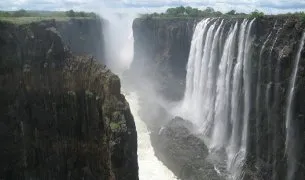
Victoria Falls The Spectacular Victoria Falls is once again living up to its reputation. It is the largest and most spectacular waterfall in the world. It deserves its place as one of the Seven Natural Wonders of the Earth. The volume of water flowing over Victoria Falls measured on 23 April 2020, is 4086 Cubic Meters per Second. This is FOUR times greater than the flow one year ago and that is 4086 TONS of water per SECOND flowing into the Batoka Gorge. Can you imagine the roar that this volume of water creates cascading into the narrow gorge? And the huge plume of spray rising high into the air? Batoka Gorge The Victoria Falls has a width of 1708 Meters (5604 Ft). It creates the largest sheet of falling water in the world. The Batoka Gorge is between 80 Meters and 108 Meters (354 Ft) deep at the base of at the waterfall. The average width of the gorge is around 50 Meters (150 Ft) at the waterfall. The flow of the Zambezi River varies considerably. The lowest annual flow being measured in October to December and the peak flow is in April May each year. This year in 2020, the Zambezi River Authority predicts that the peak should be reached towards the end of May 2020. Lake Kariba The Zambezi River right now in April 2020, is running at its highest level in the last decade as it plunges over Victoria Falls. The highest peak flood was recorded in 1958. The water flow was measured at over 10,000 Cubic Meters of water per second. This coincided with the early construction of the Kariba Dam downriver from Victoria Falls which ended up creating the Lake Kariba. The lake extends upriver by 223 Kilometers (139 Miles) and is up to 40 Kilometers (25 Mils) wide.
Wildlife Conservation continues through COVID-19.
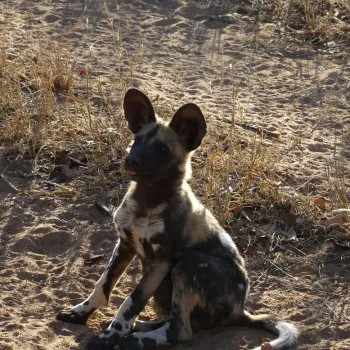
Conservation Southern Africa may be suffering under the effects of COVID-19 crises with travel bans and lock-downs being the order of the day, however Wildlife Conservation continues through COVID-19 and the amazing people in the field of Wildlife Conservation have not allowed this to influence their efforts in protecting and nurturing one of the most beautiful resources that we are so very proud of – The amazing and diverse African Wildlife. It is of critical importance now that the Wildlife Conservation continues their work unabated through the COVID-19 crises. African Painted Dog One of the species that needs our very special attention is the African Wild Dog. Now known as the African Painted Dog. One of the most prolific and successful predators in the wild. They are unfortunately very prone to clashes with the ever increasing human population. Some of these Painted Dogs have been trans-located to the beautiful Mana Pools area in Zimbabwe where they receive special support. Herewith the article recently published in the Daily Southern & Eastern Africa TOURISM UPDATE. The non-profit partner in this operation, Wilderness Wildlife Trust, has allocated vital funding required to feed the recently trans-located wild dogs. The pack is in Zimbabwe’s Mana Pools National Park for an additional five months. Source – Wilderness Safaris Blog Puppies are coming Together with Capmount Lodges and Painted Dog Conservation, we trans-located the dogs late last year. The aim is to release them into the park this month once they were acclimatized to the area. However, the alpha female is now pregnant. The pack now needs to stay in the boma for an additional five months or so. This according to Wilderness Safaris Group Sustainability Manager, Dr Neil Midlane. “There are only 7 000 wild dogs left in Africa. It is imperative that we continue to take proactive measures to help secure the future of the species.”