

Cape Town Wine Tours – Experience the best of South African wines.
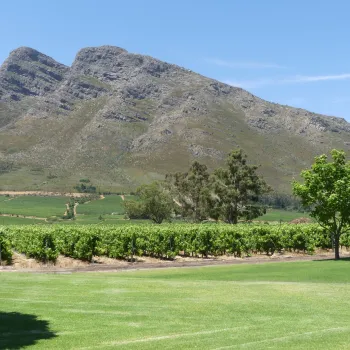
Experience the best Cape Town Wine Tours and and taste some award-winning wines South Africa is known for. Immerse yourself in the local splendour of the Cape Winelands and enjoy unforgettable wine tasting in Cape Town! Why the Cape Winelands is One of the World’s Best Wine Regions When it comes to exceptional wine experiences of South Africa, the Cape Wine region ranks among the best wine destinations in the World. With its scenic landscapes, diverse terroir, and centuries of winemaking tradition, it offers some of the best Cape Town wine tours and wine tasting experiences. Whether you book tailor-made tours or full day wine tours in Cape Town, you will enjoy a range of unique experiences curated by different wine specialists in the region. Unique Wine Tasting Experiences in Cape Town Visiting the Cape Winelands goes beyond sipping wine. It is a rewarding experience, an immersion into the culture, history and beauty of South Africa’s winemaking heritage. We have some great benefits that put us on par and ahead of many of the other wine regions around the World. Cape Town is in the major wine-producing areas compared to other wine regions in the World. Unlike other wine regions around the world that require hours of travel from the nearest port of entry. This accessibility makes it easy to enjoy multiple wine tours in Cape Town in a single day. Spectacular Cape Wine Regions In Cape Town, we have the spectacular cape wine region of Constantia that is a 20-minute drive at the most from the city centre. And the wine regions of Stellenbosch, Paarl and Franschhoek are all under 1-hour of driving from the city centre. Even the outlying wine-producing districts such as Worcester is just over an hour. Robertson being at best a 1h30 minutes from the city centre of Cape Town. With all these options so close, the Cape Winelands makes the perfect destination for tailor-made wine tours in Cape Town. History and Wine Regions of South Africa To better understand the Wine regions of South Africa and the wines produced in South Africa . We need to go back in history a little bit. South Africa’s wine making tradition dates back to 1652 , when the Dutch settlers arrived in Cape Town and discovered that the Mediterranean climate was ideal for the making of good wines. They planted the vineyards for that purpose. Wine-makers produced high quality wines dessert wines, sweeter varieties, and red wines under strict restrictions. As a result, South Africa became well known for the dessert wines and red wines. The Discovery of Cold Fermentation in Tulbagh Early in the 1950s, cold fermentation started in the Tulbagh area on the Twee Jonge Gezellen wine estate. This process was essential for the production of good white wine. Winemakers placed a barrel of wine under a cold mountain spring to reduce the temperature of its contents The result was a good white wine from this barrel. The Making of Vin De Constance Wine Vin de Constance was the wine that gained prominence in the early days before the cold fermentation process. The sweet wine is from the Constantia wine region at Klein Constantia wine. Winemakers produced this dessert wine in small volumes and offered it only to a select audience in the early days. Vin de Constance was very popular but only available to royalty and the rich. One of the early supporters of Vin de Constance wine was Napoleon. He was permitted to receive a daily measure of Vin de Constance while banished to Saint Helena. Stellebosch: The Heart of Cape Town Wine Tours Any Cape Winelands tour would be incomplete without a visit to Stellenbosch. During the Wine Tours in Cape Town, exploring the city centre of Stellenbosch is one of the top things to do. Stellenbosch is a beautiful old town and centre of the wine region. The term’ spectacular cape wine region will not be complete without Stellenbosch. History of Pinotage Wines in South Africa There is a variety of different wines produced in the Stellenbosch wine region. Pinotage is our very own South African cultivar developed in the Stellenbosch wine region by Professor Harold Perold. He decided to cross Pinot Noir with Hermitage rootstock and created wine out of this named Pinotage. He found that this was a good full-bodied red wine. Professor Perold published his findings but, the agriculture faculty did not take it up. After the passing of the professor, his former student passed his old residence and saw that the property developers were removing his vines. The student managed to stop them and saved the grapevines that he later took to Elsenburg Agriculture College. Kanonkop Wine Estate Kanonkop Wine Estate took these findings and developed Pinotage under the winemaker Beyers Struter who was at Kanonkop at the time. Mr Struter brought Pinotage to prominence and won many awards. Beyers Struter then eventually decided to leave Kanonkop Wine Estate. He then went and set up his own and purchased a property just across the valley from Kanonkop. Beyerskloof Wine Estate Beyers Struter had a 5-year restraint of trade agreement. He saw how the South African consumer arena was changing. More African communities are now discovering wines which is a huge growth area for the future. Struter developed a Pinotage wine that was easier to drink, a picnic-style wine marketed under the label Beyerskloof. The original Pinotage was a full-bodied red wine ideal when paired with a red meat dish. But it is also a wine that would not suit the palate of a new wine drinker. Today, Pinotage wine is still the traditional full-bodied Pinotage. Discover this when you visit Wine Estates in the Stellenbosch Wine regions, especially at Kanonkop Wine Estate. But for the new entrants, we have the Beyerskloof variety that is a much easier wine to drink. We also have a white Pinotage that is now available on any wine tours in cape town. They are still producing a variety of sparkling wines, white wines and red wines.
Lion Mauls American Tourist
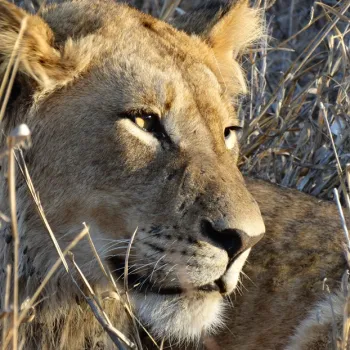
Lion Mauls American Tourist – Another very sad and avoidable Incident that reflects negatively on safe Tourism in Africa The highly publicized attack- Lion mauls American Tourist – during the past week at the Lion Park near Johannesburg in South Africa again highlights the grave need for Tour and Safari Operators, and Tour Guides to know and understand the behavior patterns of Wild animals before taking clients on Safari and the need to ensure the absolute safety of our clients. I draw your attention to our blog entry dated 19th March 2015 where we discussed a young hyena being in close proximity to our tour group while on Safari at the picnic spot in Kruger National Park. Drawing on many years of experience of taking tour groups into the nature areas, we were able to provide our clients with a very special experience on the day and in total safety. In this instance where the Lion attacked Miss Kathrine Chappell through the open car window at the Lion Park, there had to be numerous signals given by the lion leading up to this incident. It would be totally unnatural behavior for a lion to simply grab at a person sitting INSIDE a vehicle. There must have been something, or some action, from within this vehicle to cause the lion to approach the vehicle and to react in a manner that it did. It is my view that the tour guide and driver of the vehicle would have been given numerous signals by the lions that should have alerted him to the fact that this lion was paying unusual attention to the vehicle. The photograph published following this attack shows the lioness apparently squatting next to the vehicle and peering in at the person sitting inside prior to the actual attack. Had the tour guide been paying full attention to the animal, as he should have been, he would have had sufficient time, in my view, to accelerate away from the lion, and/or to close the window at the same time. Understanding that this particular vehicle is fitted with electrically operated windows AND it is standard procedure to keep the motor running at all times while in close proximity to lions and other big five animals. It is very sad that an incident like this has happened but hopefully this will be a lesson to all tour operators and guides that we ARE the responsible person when we have clients with us and that it is our duty as tourism professionals to equip ourselves with the necessary skills to safeguard our clients. It must be remembered at all times that it is our clients who are on holiday, and not the tour guide!
The Value of Understanding animal behaviour
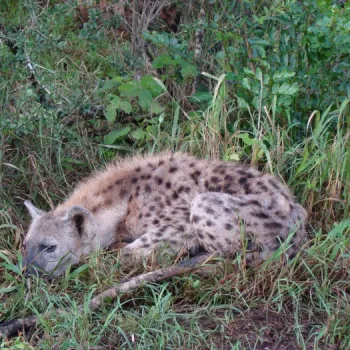
Understanding Animal Behaviour is key when you are doing a Safari (This is why understanding animal behaviour is important…) We were staying in Skukuza in Kruger National Park and doing game drives towards the south when we stopped to serve our group breakfast at the picnic spot called “Afsaal” which is not fenced off. I was setting up for breakfast next to our tour vehicle when I noticed this juvenile Spotted Hyena lying next to the undergrowth approximately 4 metres from where we were standing. He was very relaxed and quietly watched us place the chairs for our group to sit down. The group returned from visiting the shop and dished up hurriedly and sat down to have their breakfast. When everybody was busy eating, I asked one of the ladies to look over her shoulder, and when she saw the hyena lying 3 metres behind her, she got such a fright that she threw her place of food in the air and bolted for the open door to get in the vehicle. All her friends looked over their shoulders and also started running. It took all my power of persuasion to calm them down and to convince them that they were in no danger at any time. In fact the hyena was probably a lot more frightened than they were.
Hluhluwe-Umfolozi Game Reserve in KwaZulu Natal
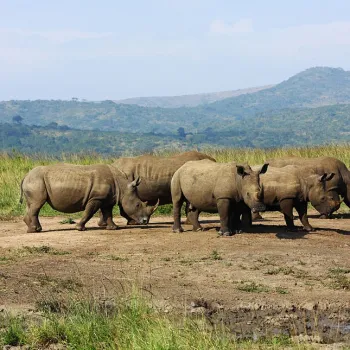
Celebrating KwaZulu-Natal’s Hluhluwe-Umfolozi Game Reserve Taking a time to visit one of the most celebrated Game Parks in South Africa known as Hluhluwe-Umfolozi Game Reserve is something to experience. The Game Park is situated in the KwaZulu Natal region and it is the oldest Game Parks in Africa. This park is home to all the big five animals. It is know for its variety of Wildlife, bird life and also for its Rhino conservation. See pictures taken during our visit to this park. –Rhino’s after a muddy bath –Buffalo’s in Hluhluwe Game Reserve –Beautiful view of the accommodation in the park –Elephants after a swim in the river -A Male Lion in the Game Park By Africa Explore Safaris[/vc_column_text][vcex_image][/vc_column][/vc_row]